If you’ve ever booked a practice session at a golf driving range in Bangkok only to watch the sky turn grey an hour before you leave, you already know the frustration. Choosing where to train in this city isn’t just about location or price, it’s about whether you can actually get your reps in, week after week, no matter what the weather is doing. For a lot of players, that decision comes down to one question: indoor or outdoor? This guide breaks down the real differences between an indoor golf driving range in Bangkok and a traditional outdoor range, with the honest pros and cons of each, so you can pick the setup that actually fits how you want to practice.
Why the Choice Matters in Bangkok’s Climate
Bangkok’s weather is not kind to a consistent practice routine. From roughly May through October, afternoon thunderstorms roll in fast and often, and during the hotter months, the midday sun can push the heat index into territory where swinging a club for an hour stops being fun and starts being a health decision.
That unpredictability matters more than it sounds. Improvement in golf comes from regular, repeatable practice of the same swing, over and over, until it holds up under pressure. A routine that gets rained out every third session is a routine that stalls. Weather is the single biggest reason a driving range in Bangkok either becomes a habit you keep or a plan you quietly abandon.
So before you commit to a package or membership, it’s worth understanding how each type of range handles the climate and what you gain and give up with each. By the end of this article, you’ll know the difference between indoor and outdoor ranges, the trade-offs of both, and which one suits a beginner, a steady improver, or someone getting ready to play a real course. If you want a deeper look at how the wet season specifically affects your game, our guide to practicing during Bangkok’s rainy season covers it in detail.
What Makes a Driving Range “Indoor” vs “Outdoor”?
The labels sound obvious, but there’s more nuance than most beginners expect, and the terms get used loosely.
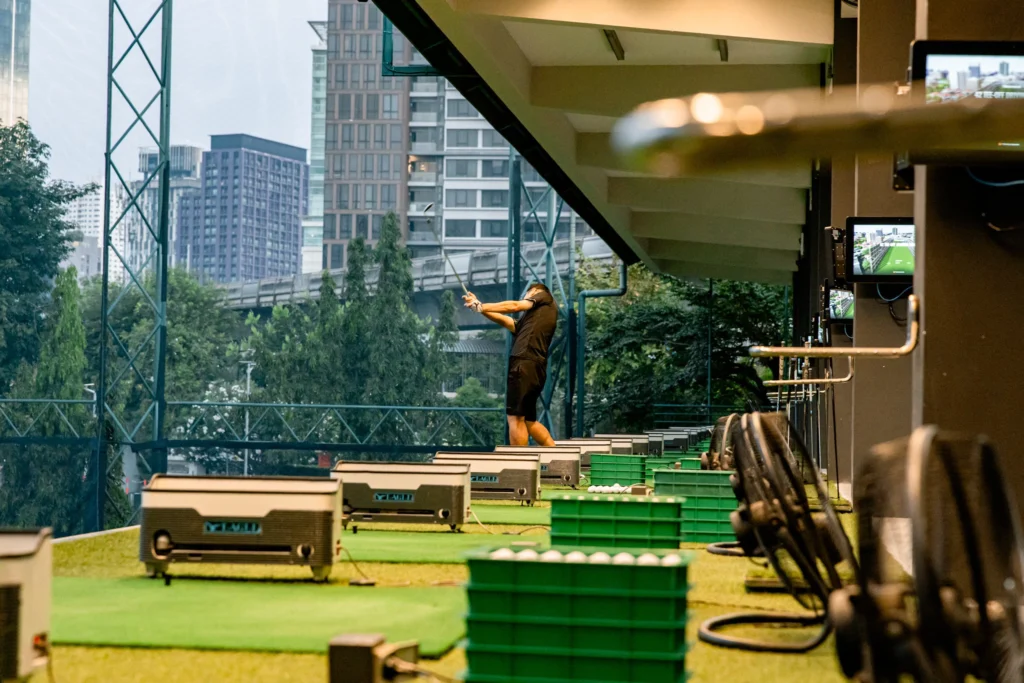
An outdoor driving range is the classic setup: open-air hitting bays facing a long, netted or open field, where you can watch the ball fly its full distance and land downrange. Some outdoor ranges are fully exposed to the elements; others add a roof over the bays while keeping the field open.
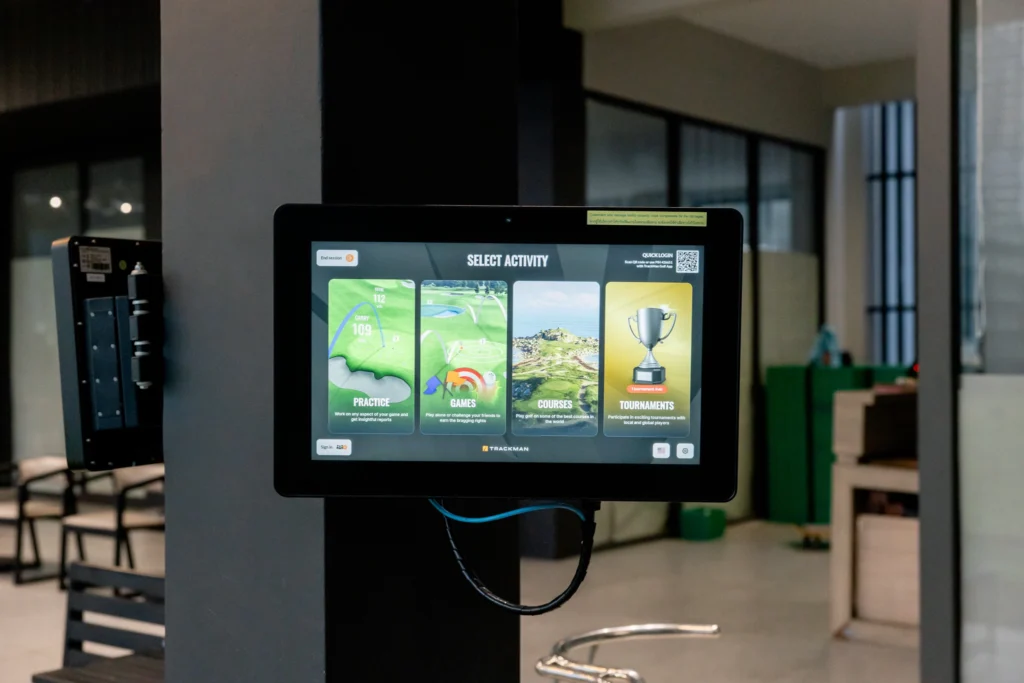
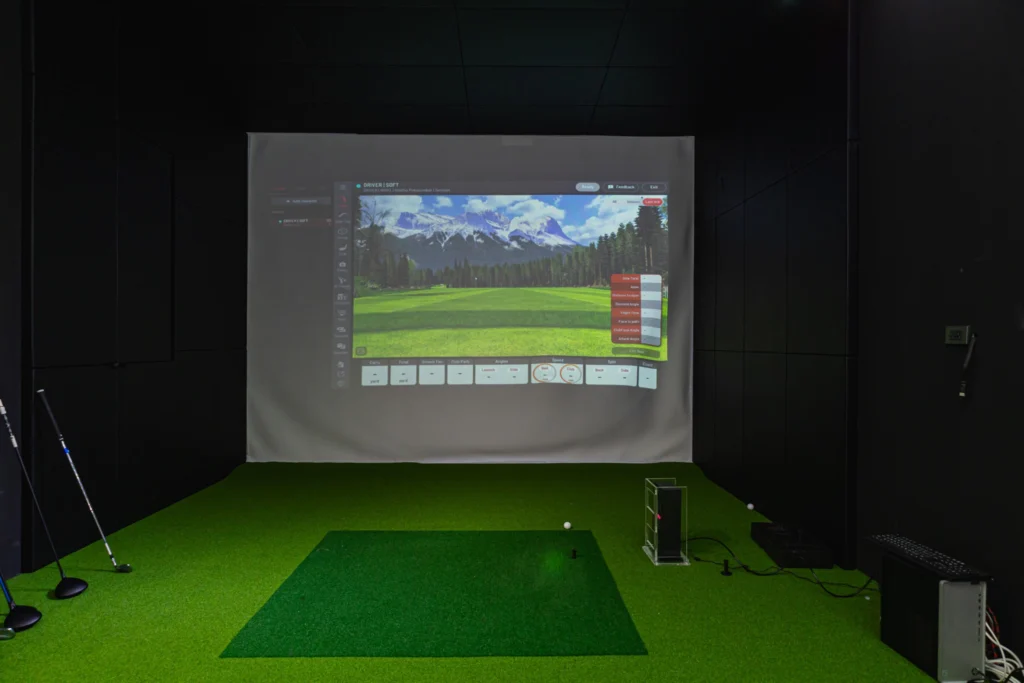
An indoor or covered driving range keeps you and your hitting area fully sheltered. This ranges from a covered bay with a shorter open outfield to a fully enclosed space where you hit into a screen or short net. Many indoor setups pair this with technology: a launch monitor or simulator that measures your swing and ball flight and shows the numbers on a screen, so you don’t need to see the ball travel 200 metres to know exactly what it did.
The short version: outdoor is about real ball flight in real conditions, and a covered driving range in Bangkok is about controlled, all-weather practice with more data. Both can genuinely improve your game; they just do it differently.

Indoor / Covered Driving Ranges
Pros
- Weatherproof & Consistent: Play any day or time without weather cancellations, ideal for building a regular routine.
- Tech-Driven Feedback: Equipped with launch monitors and simulators providing exact metrics (clubhead speed, launch angle, spin, carry distance) to fix flaws with real data.
- Climate-controlled: Air-conditioned environments keep practice comfortable regardless of heat or humidity.
Cons
- Limited Visual Flight: Hitting into screens or short outfields prevents watching the ball’s full natural trajectory and landing.
- No Real-World Variables: Lacks natural crosswinds and environmental factors found on an actual golf course.
Outdoor Driving Ranges
Pros
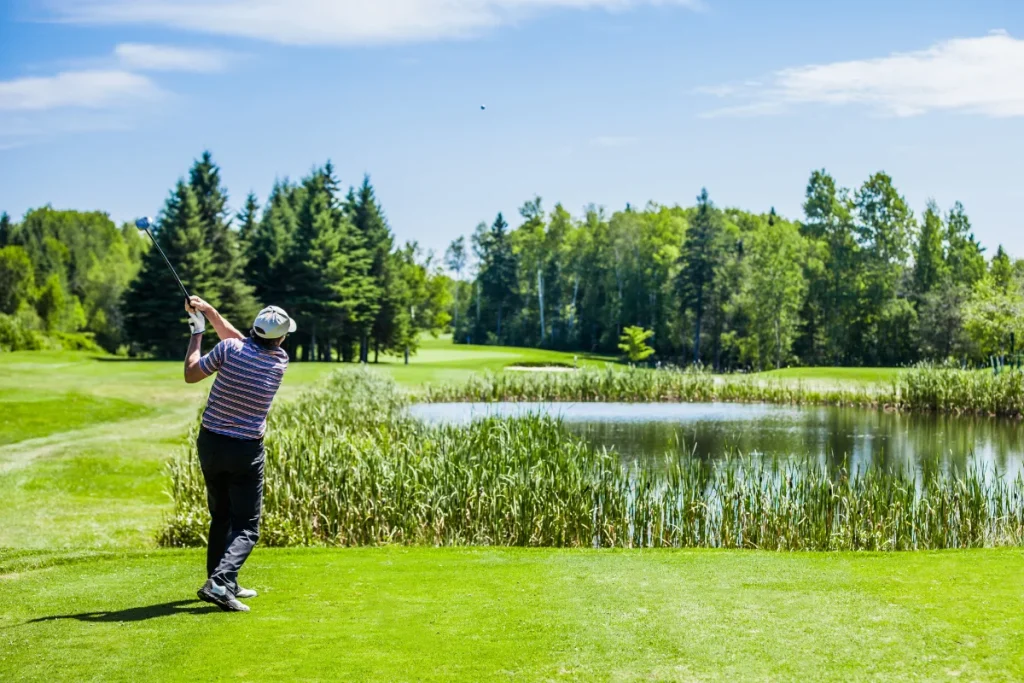
- Full Ball Flight: Watch the ball’s complete trajectory from launch to landing for maximum visual feedback and satisfaction.
- Real-World Conditions: Helps you practice adapting to natural wind, air density, and heat—skills that transfer directly to the course.
- Authentic Feel: Open space provides a realistic, motivating atmosphere closest to actual course play.
Cons
- Weather-Dependent: Sessions can be frequently interrupted by rain or extreme daytime heat, hindering continuous progress.
Which One Fits Your Goals?
There’s no universally “better” option; the right choice depends on what you’re trying to do. Here’s a quick way to match the setup to your goal:
| Your situation | Better fit | Why |
| Complete beginner | Indoor / covered | Consistent, comfortable reps and instant feedback build fundamentals faster |
| Improving steadily, practising often | Indoor / covered | Weather-proof routine plus launch-monitor data drives measurable progress |
| Preparing to play a real course | Outdoor (or a mix) | Real ball flight and wind translate directly to on-course performance |
| Limited, fixed practice times | Indoor / covered | You can’t afford to lose sessions to rain |
For many players, the smartest answer is a combination: build your swing and log your reps at an indoor range, then test it outdoors as a course round approaches. But if you have to pick one for reliable, year-round practice in Bangkok, the all-weather option usually wins on sheer consistency, and consistency is what actually lowers your scores.
Frequently Asked Questions
Is an indoor driving range good for beginners?
Yes, arguably it’s the ideal starting point. Beginners benefit most from lots of comfortable, uninterrupted repetition, and an indoor golf driving range in Bangkok removes the two biggest obstacles: weather and heat. The launch-monitor feedback common at indoor ranges also helps new players understand what their swing is actually doing, which is far more useful early on than simply watching a ball fly.
Can I practise at an outdoor range during the rainy season in Bangkok?
Sometimes, but not reliably. Bangkok’s rainy season brings frequent, often sudden afternoon and evening storms, which can cut sessions short or wash them out entirely. If you’re serious about practising consistently through the wet months, a covered or indoor range is the dependable choice to keep your routine no matter what the forecast says.
Does 42 TEE-OFF offer indoor or outdoor practice?
42 TEE-OFF is a covered, all-weather facility, so you can practise every day of the week regardless of rain or heat, with the technology to track and improve your swing along the way. It’s built specifically for the kind of consistent, year-round training that Bangkok’s climate makes difficult at fully outdoor ranges.
Indoor vs. Outdoor: Making the Right Choice for Your Game
The choice between an indoor and outdoor driving range really comes down to how Bangkok’s weather fits your goals. Outdoor ranges give you the most course-like experience and real ball flight, but they’re at the mercy of the rain and heat. Indoor and covered ranges trade a little of that realism for something most players value more: the ability to show up and practise consistently, with better feedback, on any day of the year. If your priority is building a swing you can rely on without the weather deciding whether you get to train, a covered driving range in Bangkok is hard to beat.
Come see the difference for yourself: book a trial session at 42 TEE-OFF, the covered driving range in Sukhumvit, and get a feel for what all-weather practice can do for your game. And if you’re still exploring your options, our overview of finding the right golf driving range in Bangkok is a good next read.
Book a Session at 42 TEE-OFF
📍 Address: 1022 Sukhumvit Rd., Phrakanong, Klongtoey, Bangkok 10110
🚇 BTS: Phra Khanong
📞 Phone: 095 567 1541 / 061 553 1541
📱 LINE: @42tee-off
🕐 Opening Hours: Mon–Fri 07:00–23:00 | Sat, Sun & PH 06:00–22:00